🔑 Key Takeaways
- Family approval is central to most Asian cultures - in many cases, you are not just dating her, you are dating her entire family.
- Communication styles differ sharply: indirect expression, silence, and non-verbal cues carry more weight than explicit statements in many Asian cultures.
- Religious and philosophical traditions - from Confucianism to Islam to Buddhism - shape expectations around gender roles, marriage timelines, and daily life.
- Understanding and respecting cultural differences does not mean abandoning your own identity - the healthiest cross-cultural relationships are built on mutual adaptation.
- WCAC's Cultural Compatibility Algorithm matches partners across 15 cultural dimensions, resulting in an 89% success rate among members active for 3+ months.
The single biggest factor that determines whether a cross-cultural relationship thrives or fails is not love - it is cultural understanding. Western men who successfully build lasting relationships with asian women are not the ones who ignore cultural differences; they are the ones who learn them, respect them, and integrate them into the relationship. This guide covers the core cultural dimensions you need to understand - family dynamics, communication patterns, religious influences, marriage expectations, and practical adaptation strategies - so you can build a relationship grounded in genuine compatibility, not just attraction.
Family Dynamics: East vs. West
In Western culture, dating is largely a private decision between two individuals. In most Asian cultures, family involvement ranges from significant to absolute. This is the cultural difference that catches Western men off guard most frequently - and the one that matters most to navigate well.
The Role of Family Approval
When you date an Indian woman, her parents' opinion is not just appreciated - it is often a prerequisite for the relationship to continue. In South Asian families, arranged introductions still account for over 55% of marriages in India as of 2025. Even in families that support "love marriages," parental blessing carries enormous emotional weight.
The same principle applies, with cultural variations, across Asia. Korean families place strong emphasis on the man's education level, career stability, and family background. Japanese families may be less overtly involved but quietly assess your seriousness and social standing. Pakistani families often expect formal introductions early and evaluate religious compatibility as a baseline requirement.
💡 Practical Tip: When meeting her parents for the first time, bring a thoughtful gift - fruit, pastries, or something from your home region. Address her parents with formal titles. Show genuine interest in her family's traditions. These small gestures communicate respect in a language that transcends words.
Collectivism vs. Individualism
Western culture values individual autonomy - "follow your heart" is the default dating advice. Asian cultures broadly prioritize collective harmony - decisions about relationships, finances, and even career moves factor in the family's wellbeing. This does not mean your partner lacks independence. It means she considers her family's perspective as an integral part of her decision-making process, not an external pressure.
Understanding this distinction transforms how you interpret her behavior. When she says "I need to talk to my mother first," she is not being indecisive - she is honoring a cultural value that runs deeper than any single decision.
Communication Styles: What She Means vs. What She Says
Western communication tends to be direct and explicit. Asian communication - particularly in East and Southeast Asian cultures - leans heavily toward indirect expression. Misreading these signals is responsible for more cross-cultural relationship conflicts than any other factor.
Indirect Expression and "Saving Face"
In Japanese culture, the concept of tatemae (public facade) vs. honne (true feelings) means that your partner may agree with something outwardly while feeling differently internally. In Korean culture, nunchi - the ability to read the room and sense unspoken feelings - is a valued social skill. Thai culture emphasizes kreng jai, the avoidance of imposing on others or causing discomfort.
None of this means she is being dishonest. It means the cultural bandwidth for expressing disagreement, discomfort, or negative emotions is different from what you are used to. Pay attention to tone shifts, hesitation, changes in energy, and what she does not say as much as what she does.
| Aspect | Typical Western Style | Common Asian Style |
|---|---|---|
| Expressing disagreement | "I don't agree with that" | Silence, topic change, or "maybe" |
| Showing affection | Verbal ("I love you"), public displays | Acts of service, cooking, quiet gestures |
| Conflict resolution | Direct confrontation, "let's talk it out" | Cooling-off period, indirect resolution, mediation through family |
| Making requests | "Can you do this for me?" | Hinting, creating context for you to offer |
| Receiving compliments | "Thank you!" | Deflection or downplaying ("Oh, it's nothing") |
| Pace of emotional intimacy | Fast verbal escalation | Gradual, demonstrated through actions over time |
The Language Barrier - And Why It Matters Less Than You Think
Language differences are real but manageable. WCAC's built-in real-time translation tools help bridge conversational gaps, and many Asian women on the platform speak conversational to fluent English. The deeper challenge is not vocabulary - it is understanding the cultural subtext behind the words. A woman who speaks perfect English may still communicate in culturally indirect ways. Learning her communication style matters more than learning her language, though doing both earns genuine respect.
The Role of Religion and Philosophical Traditions
Asia is the birthplace of the world's major religions and philosophical systems, and these traditions shape relationship expectations in ways that are often invisible to outsiders.
Confucian Influence: East Asia
Confucianism underpins social structures in China, Korea, Japan, and Vietnam. Its core principles - filial piety (respect for elders), social harmony, hierarchical relationships, and moral self-cultivation - directly influence dating norms. Respect for her parents is not optional; it is a reflection of your character. Age-based hierarchy means that older family members' opinions carry significant authority in relationship decisions.
Buddhist Values: Southeast Asia
In Thailand, Myanmar, Cambodia, and Laos, Theravada Buddhism teaches moderation, compassion, and karma. Thai women often interpret generosity and patience as signs of good karma and strong character. Merit-making activities - such as donating to temples or participating in Buddhist ceremonies - demonstrate cultural sensitivity that deepens connection. Understanding the Buddhist calendar and respecting holy days shows genuine engagement with her spiritual life.
Islamic Traditions: South and West Asia
For Pakistani, Bangladeshi, Indonesian, Malaysian, and Maldivian women, Islam often defines the framework for courtship and marriage. Halal dating practices may include chaperoned meetings, family involvement from the start, and clearly stated intentions toward marriage. Ramadan, Eid celebrations, dietary practices, and modest dress codes are not restrictions - they are expressions of faith that she values deeply. Respecting these traditions, even if you do not share them, communicates that you value her as a whole person.
Marriage Expectations: Timelines, Roles, and Commitment
In Western dating culture, the progression from casual dating to exclusive relationship to engagement can span years with no fixed timeline. Many Asian cultures operate on a faster, more intentional track - particularly when a woman is in her late twenties or older.
Marriage as a Family Event
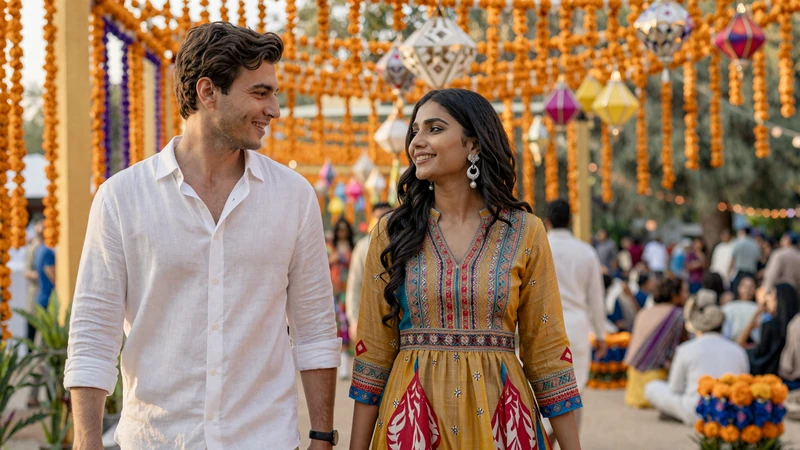
Asian weddings are rarely just about the couple. They are family alliances, community celebrations, and cultural ceremonies that carry deep significance. Korean weddings include a formal pyebaek ceremony where the couple bows to the groom's parents. Indian weddings span multiple days with rituals that vary by region, religion, and caste. Japanese weddings may blend Shinto shrine ceremonies with Western-style receptions. Understanding that marriage is a communal - not just personal - event helps you approach the process with the right mindset.
Gender Roles: Traditional and Evolving
It is a mistake to assume that all Asian women want traditional gender roles, just as it is a mistake to assume none of them do. The reality varies enormously by country, generation, and individual. Urban, college-educated Korean and Japanese women in 2026 often prioritize career alongside family. Many Filipino and Vietnamese women embrace partnership models where both partners contribute financially and domestically. Pakistani and Indian women from conservative families may hold more traditional expectations. The key is to discuss expectations openly rather than assuming either alignment or conflict.
Holidays, Traditions, and Cultural Celebrations
Participating in her cultural celebrations is one of the most powerful ways to build connection and earn family acceptance. Lunar New Year (celebrated across China, Vietnam, Korea), Diwali (India, Nepal, Sri Lanka), Songkran water festival (Thailand), Chuseok (Korea), and Obon (Japan) are not just holidays - they are expressions of cultural identity.
- Lunar New Year: Prepare red envelopes (hongbao) for family members, learn basic greetings in her language, and participate in family meals. Avoid the number four (associated with death in Chinese, Korean, and Japanese culture).
- Diwali: Join in lighting diyas, exchange sweets, and wear traditional clothing if invited. Showing enthusiasm for the festival of lights earns genuine warmth from Indian families.
- Eid al-Fitr: Respect the fasting period of Ramadan, join iftar (fast-breaking meals), and dress modestly when visiting her family. Bringing desserts or dates is a thoughtful gesture.
- Chuseok: Help prepare songpyeon (rice cakes), visit ancestral graves with her family, and participate in traditional games. Korean families appreciate a man who engages rather than observes.
Adapting Without Losing Yourself
The goal of cross-cultural dating is not to become someone you are not. It is to expand who you are while remaining authentic. The healthiest intercultural couples on WCAC share a common pattern: both partners adapt in areas that matter to the other without surrendering their core identity.
The 70/30 Adaptation Framework
Successful cross-cultural couples typically find that adapting about 70% toward shared cultural ground while maintaining 30% of individual cultural identity creates the most sustainable balance. You do not need to convert to her religion, abandon your holiday traditions, or change your communication style entirely. You need to understand her cultural context, meet her halfway on the things that matter most to her, and communicate openly about where your boundaries are.
WCAC's Cultural Compatibility Algorithm evaluates 15 cultural dimensions - including family involvement preferences, communication styles, religious observance levels, and lifestyle expectations - to match partners whose 70/30 zones naturally overlap. This is why 89% of members who actively use the platform for three or more months find meaningful relationships. Cultural compatibility is not about identical backgrounds - it is about complementary values and willingness to grow together.
💡 Final Insight: Cultural differences are not obstacles to love - they are invitations to become a more empathetic, perceptive, and adaptable partner. The man who takes time to learn why her mother's opinion matters, why silence can mean trust, and why a shared meal during Lunar New Year means more than a dozen roses - that man builds a relationship that lasts. Whether you are drawn to Indian women, Pakistani women, Japanese women, or Korean women, the path to a thriving relationship starts with cultural curiosity - and WCAC is built to help you walk that path with confidence.